
 Image 1 of 3
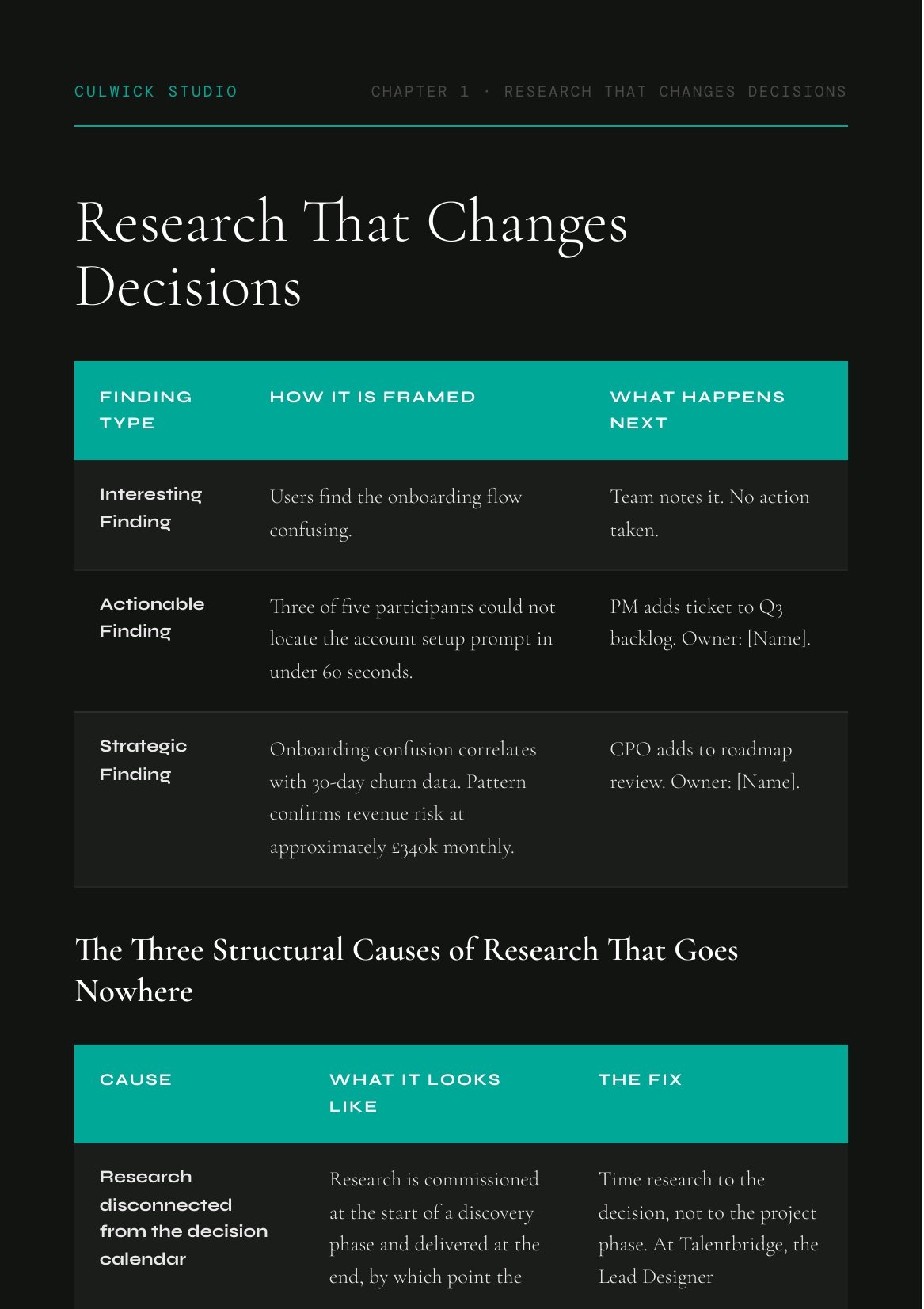 Image 2 of 3
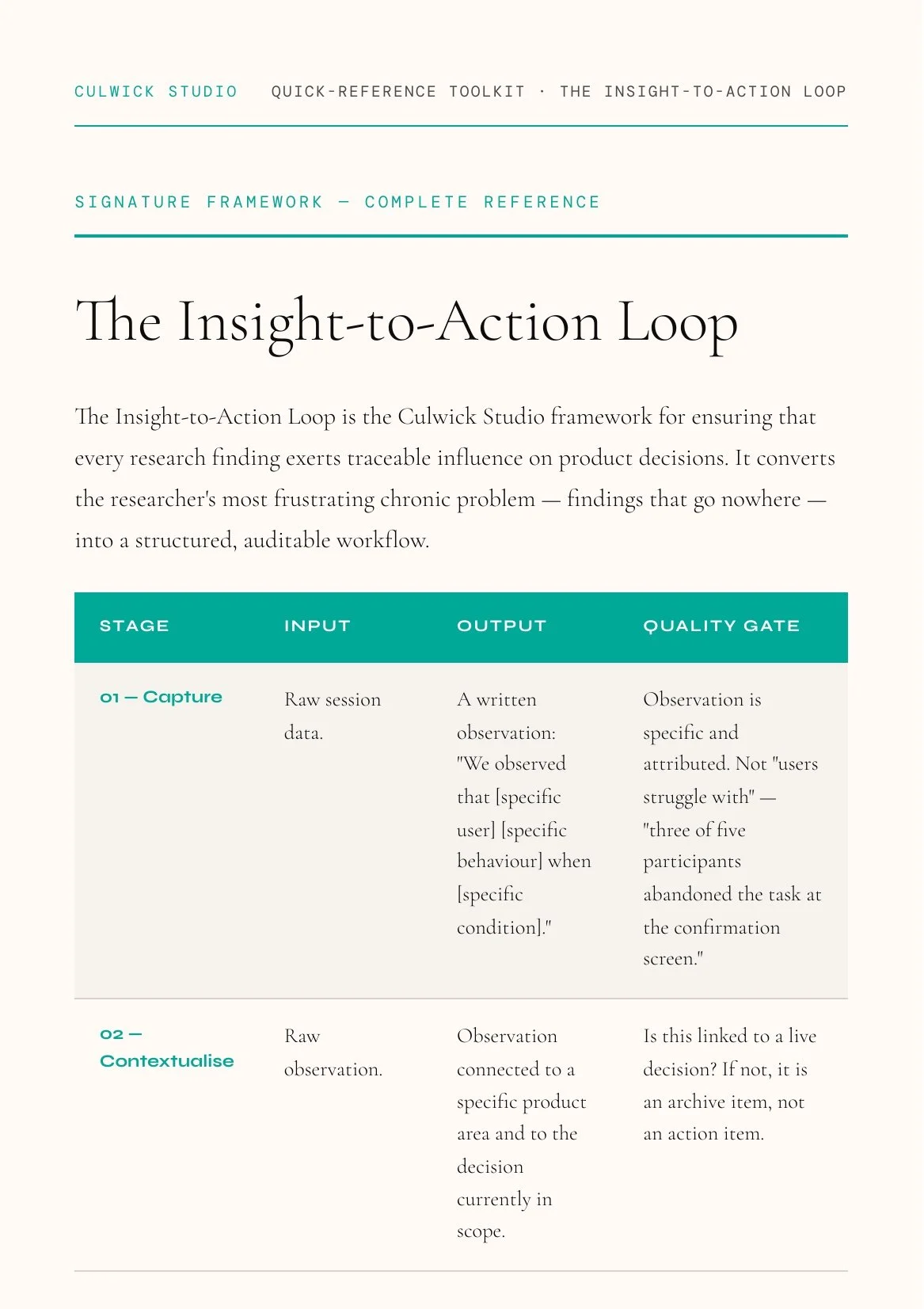 Image 3 of 3
Lead Designer Series — Playbook 06 of 08
Research that changes decisions — not research that documents what was already decided.
The failure mode of research practice in enterprise organisations is not a lack of research. It is research that generates findings no one acts on. Studies that inform a slide deck. Insights that are noted with interest, filed in a shared drive, and then overridden by stakeholder assumptions two weeks later. Teams that conduct research regularly and have almost no evidence that it has ever changed the shape of the product.
This playbook addresses research practice as an influence discipline, not a methodological one. It covers how to select the right method for the question, how to run synthesis that produces actionable outputs rather than interesting observations, and how to present evidence to sceptical stakeholders in a way that earns decision-level authority. It also covers the organisational infrastructure — repositories, rituals, contribution models — that turns research from a project-scoped activity into a practice that compounds over time.
Research that changes decisions requires more than rigour. It requires a clear line from the finding to the action, and the organisational credibility to make that line hold.
| Section | What it covers |
| Diagnostic | The Research Practice DiagnosticComplete before reading — maps your current practice against the six stages of the Insight-to-Action Loop, identifying where findings are lost between generation and use |
| Chapter 01 | Interesting vs Actionable — The Core DistinctionWhy most research produces interesting data and very little actionable intelligence; the structural differences between studies that inform decisions and studies that are noted and filed |
| Chapter 02 | Method Selection — When to Use WhatA practical guide to method choice based on the question type, not researcher preference; when to run usability testing, contextual inquiry, diary studies, and expert review — with sample size guidance and output expectations for each |
| Chapter 03 | Running Research That Produces Clean DataThe Non-Leading Discussion Guide structure; the five question types that contaminate qualitative data; how to run sessions that produce evidence rather than confirmation |
| Chapter 04 | Synthesis — From Findings to DecisionsThe Collaborative Synthesis Workshop structure; how to move from raw data to prioritised insight in a format that product and engineering teams can use; the difference between a finding and a recommendation |
| Chapter 05 | Presenting to ScepticsThe Research Evidence Hierarchy; how to structure findings presentations for stakeholders who question research validity; the three most common objections to research evidence and how to pre-empt them |
| Chapter 06 | The Living RepositoryHow to design a research repository that gets used rather than archived; the access, tagging, and contribution architecture that makes research findable and applicable across the organisation |
| Chapter 07 | Continuous Research — Building the PracticeHow to shift from project-scoped research to continuous discovery; the ceremony structure, contribution touchpoints, and team rituals that sustain ongoing research without specialist resource |
| Chapter 08 | Research Ethics in Enterprise ContextsThe ethical obligations of enterprise research practice — consent, data handling, participant vulnerability, and the organisational dynamics that create pressure to compromise them |
| Appendix | Frameworks and TemplatesThe Insight-to-Action Loop as a standalone reference; Research Evidence Hierarchy; Non-Leading Discussion Guide format; synthesis workshop facilitation guide |
- You run research regularly but struggle to demonstrate that it has changed what gets built
- Your insights get noted in reviews and then overridden by stakeholder assumptions at the next sprint planning
- You're building or inheriting a research practice and need an operational framework, not methodological theory
- You present evidence to sceptical stakeholders and need a structured approach to earning decision-level authority
- You want to shift your organisation from project-scoped research to a continuous discovery model