
 Image 1 of 3
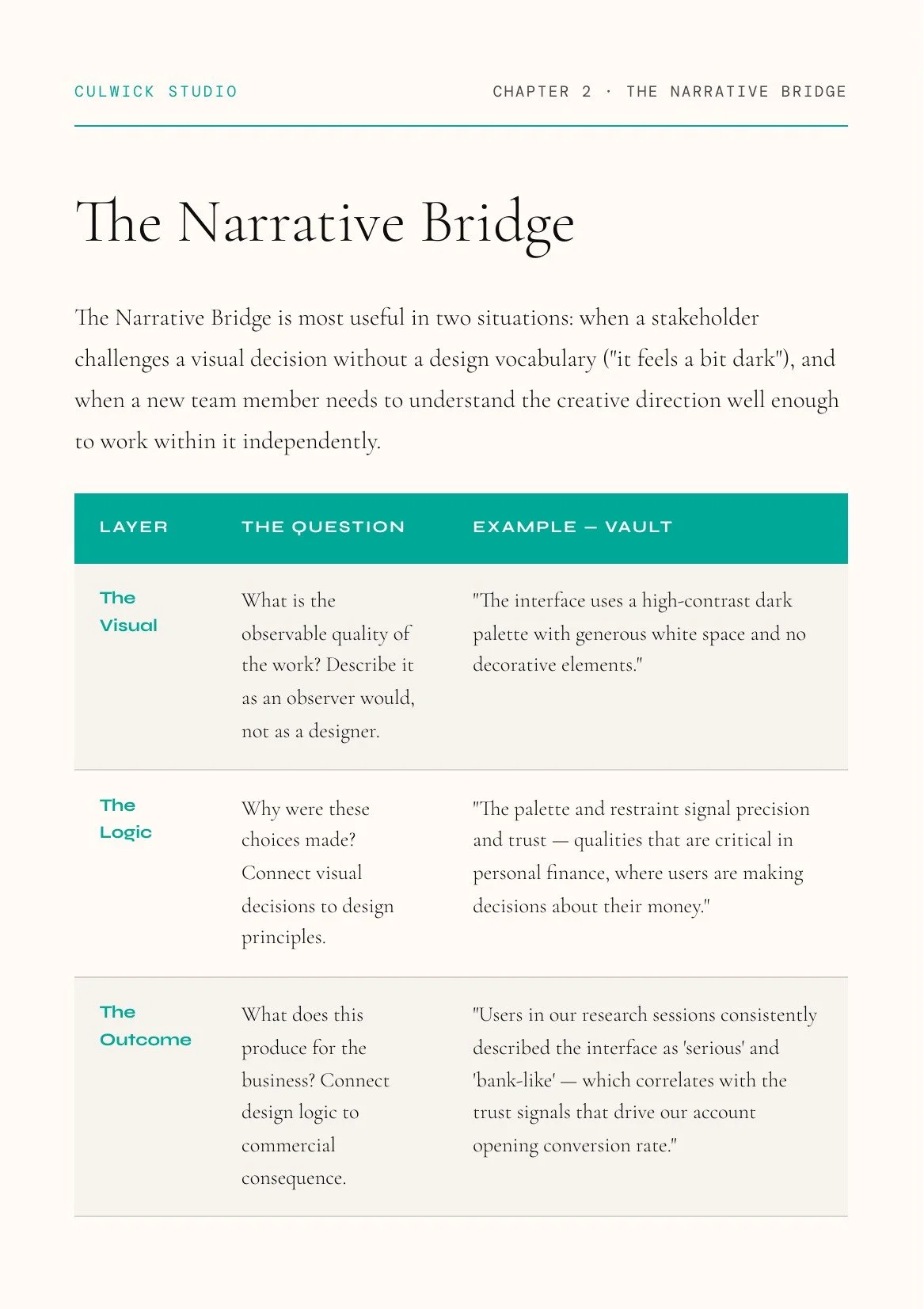 Image 2 of 3
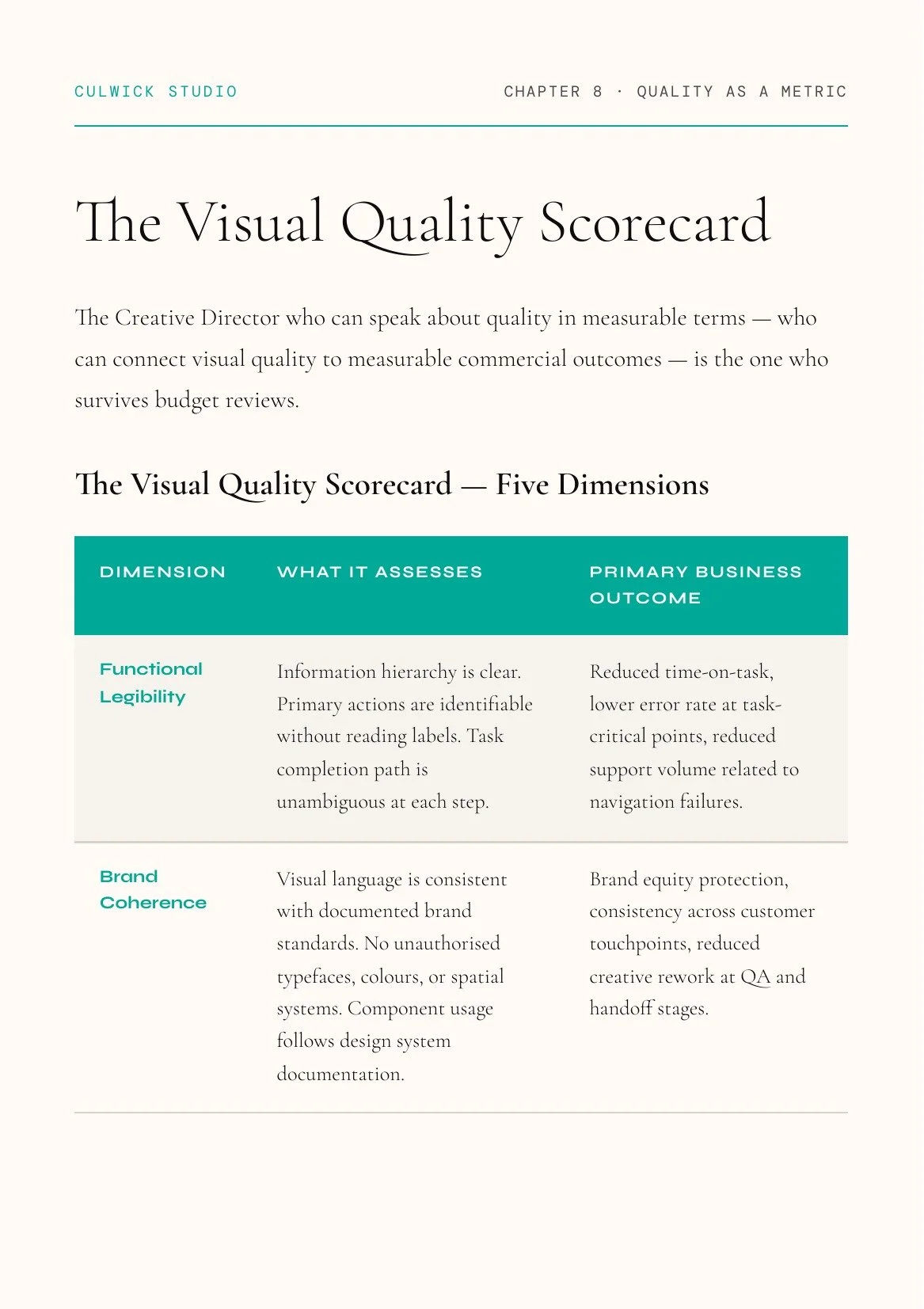 Image 3 of 3
Lead Designer Series — Playbook 08 of 08
Leading creative quality at scale — without being the one who makes every decision.
Creative directors are promoted from design because they are excellent at making design decisions. The Promotion Trap is the assumption that what made them excellent at making decisions is what will make them excellent at ensuring others make good decisions. It isn't. The skills that produce great craft in an individual contributor — pattern recognition, aesthetic judgment, decisive taste — do not transfer cleanly into a leadership context. They have to be rebuilt as communication disciplines and structural mechanisms, not instincts applied at greater volume.
This playbook addresses creative direction as an operational discipline: how to brief work in a way that produces the outcome you are holding in your mind without prescribing the route; how to run creative reviews that develop judgment rather than deliver verdicts; how to build the visual consistency mechanisms that maintain quality across a team without requiring your involvement in every decision.
Creative direction inside a complex organisation is also a commercial discipline. The brief is constrained. The timeline is fixed. The budget is a fraction of what the work deserves. This playbook covers how to produce genuinely strong creative output inside conditions that seem designed to prevent it.
| Section | What it covers |
| Diagnostic | The Creative Direction Readiness DiagnosticComplete before reading — identifies which of the three Promotion Trap failure modes is most active in your current practice, and the specific interventions that address each one |
| Chapter 01 | The Promotion Trap — Three New SkillsWhy the skills that earned you a creative direction role are the skills that most commonly undermine it; the three craft-to-leadership skill replacements that every effective creative director builds |
| Chapter 02 | The Narrative Bridge — Framing Creative IntentHow to articulate the creative intent behind a direction without prescribing the solution; the Reframe Protocol for redirecting work that has drifted from brief without demoralising the designer who produced it |
| Chapter 03 | The Constraint-First BriefHow to write a brief that produces focused creative output inside fixed constraints; why most creative briefs produce mediocre work and the structural changes that prevent it |
| Chapter 04 | Running Creative ReviewsThe Four Review Questions that structure a crit toward development rather than verdict; how to give direction feedback that builds judgment; the review format that improves team-wide creative decision-making over time |
| Chapter 05 | Visual Consistency at ScaleThe mechanisms — brand logic documents, visual quality reference libraries, decision criteria tables — that maintain creative quality across a team without requiring centralised approval of every output |
| Chapter 06 | The Brand Logic DocumentHow to build a living reference that encodes creative intent in a form that designers can apply without asking for permission; the format that replaces styleguide compliance with genuine brand understanding |
| Chapter 07 | Commercial Constraints — Working Inside the Real BriefCreative direction inside fixed budgets, compressed timelines, and stakeholder preferences that conflict with quality; how to produce strong work under conditions that were not designed to produce it |
| Chapter 08 | The Visual Quality ScorecardA five-dimension framework for evaluating creative output against brief intent — providing the structured language for quality conversations that develops team judgment rather than creating dependency on the creative director's taste |
| Appendix | Frameworks and TemplatesThe Narrative Bridge Reframe Protocol; Constraint-First Brief template; Four Review Questions reference; Visual Quality Scorecard; Brand Logic Document format |
- You're a creative director or senior designer with creative direction responsibility inside a large organisation
- You find yourself doing too much of the work rather than developing the people producing it
- Your creative reviews feel more like approval gates than development sessions
- You're working inside commercial constraints that make producing strong work genuinely difficult
- You want a structured framework for building creative quality at team scale — not just at individual output level