
 Image 1 of 3
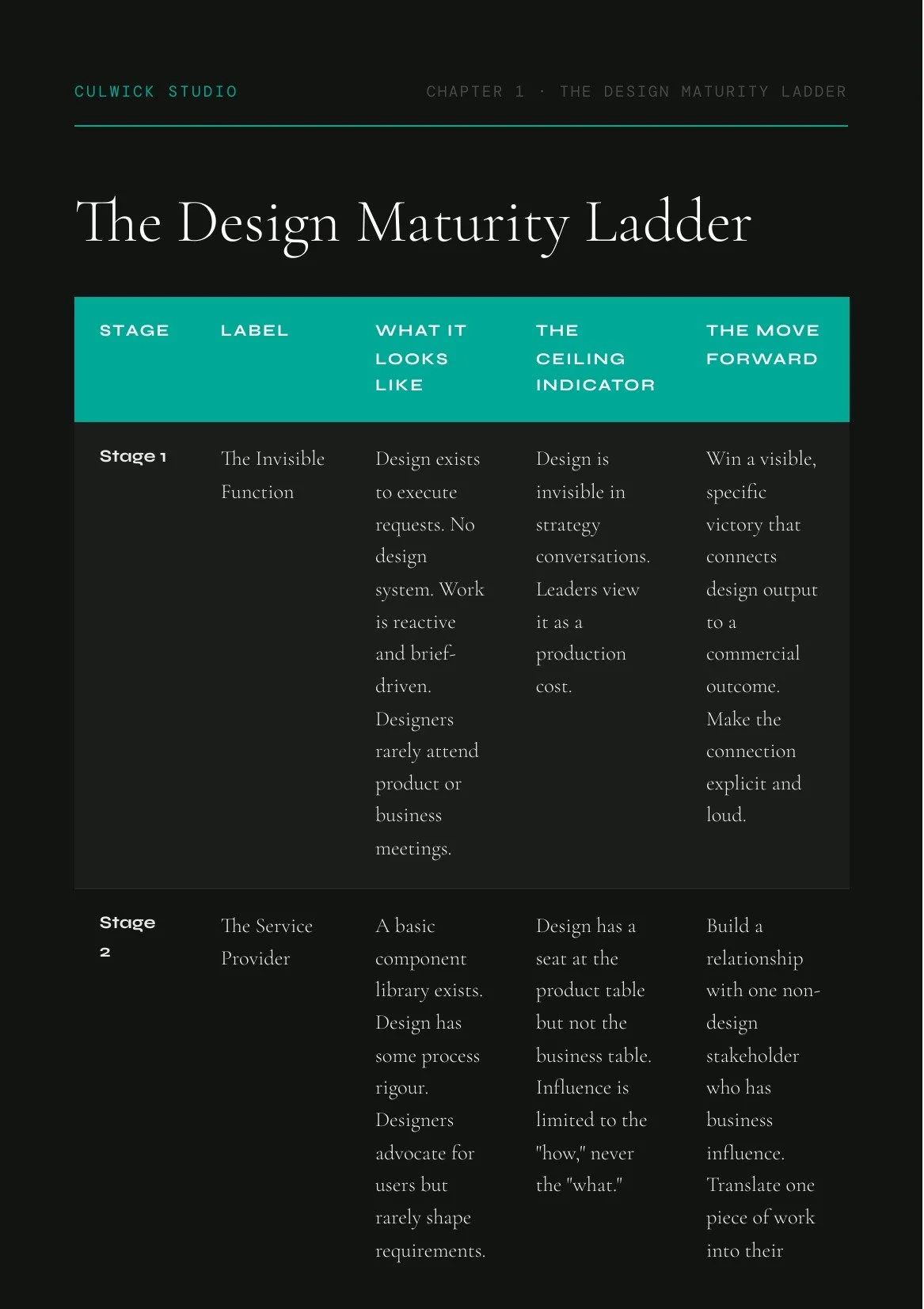 Image 2 of 3
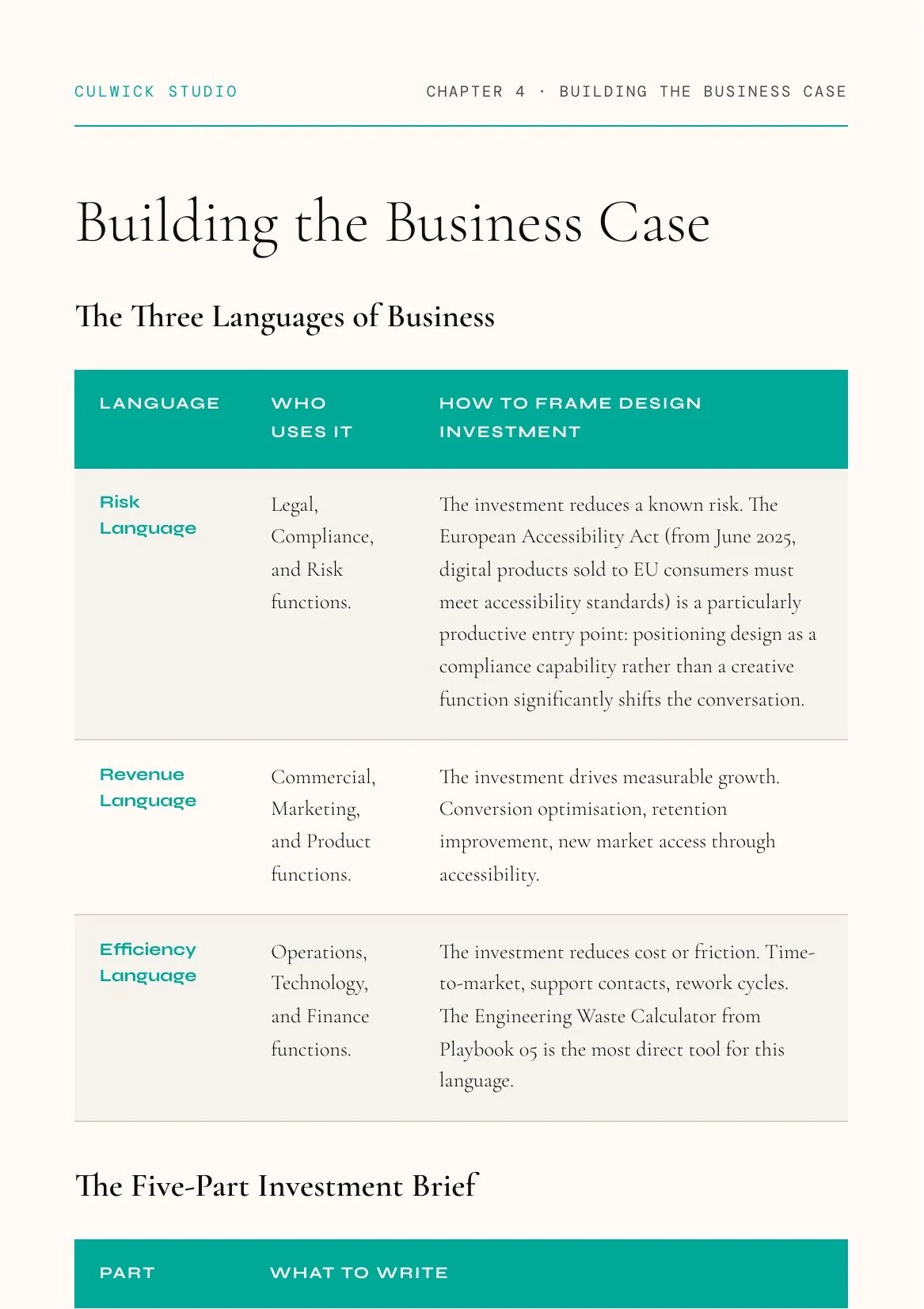 Image 3 of 3
Lead Designer Series — Playbook 07 of 08
Diagnosing where your design function is — and building the roadmap to move it forward.
Design maturity is not measured by awards or aesthetic quality. It is measured by the degree to which design has earned a structural role in how the organisation makes decisions — and by whether that role is durable enough to survive leadership changes, restructures, and shifting commercial priorities. Most design functions in enterprise organisations do not know precisely where they sit on this spectrum. And most of the frameworks that exist to help them were built for teams, not organisations.
This playbook provides the diagnostic tools and the implementation roadmap for design leaders who need to understand and actively advance the maturity of the design function they are responsible for. It covers the five-stage maturity ladder, the four diagnostic lenses, and the translation disciplines required to make design's contribution legible to the finance, legal, customer support, and commercial functions that hold the budget and the organisational authority.
Design maturity is not a passive outcome of good work over time. It is built deliberately, through specific interventions at specific stages — and it requires a leader who understands what the organisation needs to see before it is willing to invest further.
| Section | What it covers |
| Diagnostic | The Design Maturity DiagnosticComplete before reading — scores your function across four lenses to determine current stage and identify the specific interventions that advance maturity from that position |
| Chapter 01 | The Design Maturity LadderThe five-stage model from Ad Hoc to Integrated — with ceiling indicators for each stage, the conditions that create stagnation, and the specific move-forward actions that apply at each level |
| Chapter 02 | The Four Diagnostic LensesHow to assess maturity across craft quality, process integration, organisational trust, and commercial contribution — and why a function that scores highly on one lens often plateaus because of another |
| Chapter 03 | Quick Wins — Stages One and TwoThe specific, low-risk interventions that build early credibility in lower-maturity environments; how to generate visible evidence of design value before attempting structural advocacy |
| Chapter 04 | The Three Languages of BusinessHow to communicate design maturity progress in finance, operations, and commercial terms; the translation framework that makes design investment legible to the stakeholders who control resource allocation |
| Chapter 05 | The Five-Part Investment BriefThe structured format for making the case for maturity investment — headcount, tooling, research, and capability development — in a way that earns resource commitment rather than sympathetic acknowledgement |
| Chapter 06 | Coalition Building — Beyond the Design FunctionHow to build maturity advocates in finance, legal, and customer support; the specific operational reliability signals that earn cross-functional trust; why coalition building is a precondition for sustained maturity growth |
| Chapter 07 | The 18-Month Maturity RoadmapA phase-structured implementation plan for advancing design maturity — with phase go/no-go criteria, stakeholder milestones, and the three maturity fatigue patterns that cause programmes to stall before they complete |
| Appendix | Frameworks and TemplatesThe Design Maturity Ladder reference card; Four Diagnostic Lenses scorecard; Three Languages translation table; Five-Part Investment Brief template; 18-Month Roadmap framework |
- You lead a design function and want a structured framework for assessing and advancing its maturity
- Design has good craft quality but limited influence on how product and commercial decisions are made
- You're building the business case for investment in the design function and need a credible evidence structure
- You need to communicate design's contribution to stakeholders outside the product organisation
- You're in a lower-maturity environment and want a structured path forward, not a vision of what Stage 5 looks like